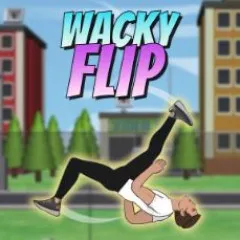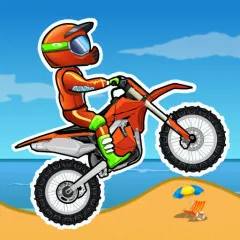
Flip or Fail turns jumping and aerial tricks into a fast arcade challenge. Players guide a character through risky sections, decide when to rotate, and try to complete each movement with a clean landing.
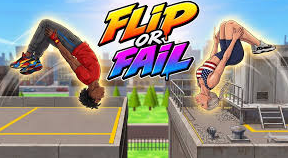
A good stunt starts with reading the environment. Some sections leave enough room for a full rotation, while tighter areas are better handled with a simple jump. Understanding the available space can prevent unnecessary failures.
W / Up Arrow — Move Forward
S / Down Arrow — Brake / Reverse
A / Left Arrow — Move Left
D / Right Arrow — Move Right
Spacebar — Jump / Flip
Mouse / Click — Interact if supported
Esc — Pause
Performing a flip may look impressive, but completing the landing is what keeps the run going. Players should begin adjusting the character's position before reaching the ground and avoid making large corrections at the last moment.
Speed affects both jump distance and aerial control. Too little momentum can leave a character short of a platform, while excessive speed can make recovery difficult.
Failed attempts can reveal exactly what went wrong. A jump may have started too early, a rotation may have lasted too long, or the character may have approached the landing at an awkward angle.
Repeating difficult sections helps players recognize these patterns and make better decisions on the next attempt.
Not every obstacle needs a spectacular stunt. Choosing a simple jump when the space is limited can be more effective than attempting a risky flip. As players become familiar with the course, they can identify which areas are suitable for more advanced movements.
Flip or Fail rewards players who combine timing, momentum, balance, and careful positioning. With practice, difficult jumps become easier to read, landings become more reliable, and each new attempt offers another chance to extend the run.