A simple rolling ball becomes a surprise challenge in Rough Ball. Uneven routes, abrupt obstructions, and hard parts require players to focus on movement rather than holding a direction and hoping.
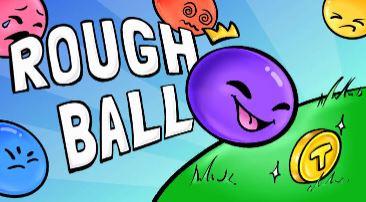
The ball navigates bumps, gaps, slopes, and obstructions. Some areas are faster to traverse, while others are slower.
The ball stays in control during difficult areas by moving steadily. Uneven terrain can make recovery difficult after sudden changes.
You must look ahead since impediments can surface soon following a slope or narrow route. Anticipating moves gives players more time to adjust.
Faster speeds can clear parts, but too much speed can deflect the ball. Around tricky obstacles, a controlled pace is safer.
Ramps and uneven surfaces can cause ball momentum changes. Understanding how the ball interacts to topography simplifies tricky areas.
Staying close to the brink can cause a fall from a tiny mistake. Players can adjust their position with extra space around the ball.
Rough Ball promotes error-conscious players. If the ball keeps falling at the same spot, it may be speed, placement, or timing, not the obstruction.
Practice makes known passages simpler to read. Players learn where to slow down, move carefully, and go quicker with time.
The appeal is making something easy harder than imagined. Rollerballing sounds straightforward, but difficult terrain alters every motion.
Each successful portion gives players a sense of progress, while challenging sections push them to try again and improve.
Rough Ball has simple controls, difficult terrain, and responsive movement. Every attempt lets players roll farther and handle the course more confidently, whether traversing slopes, avoiding hazards, or beating a prior run. Looking for another game? Try one here: Beach Volleyball Clash: Summer Smash