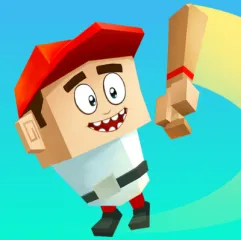
Flip Duel turns aerial tricks into a head-to-head arcade contest. Players compete through jumps, flips, and carefully timed movements, trying to complete impressive actions while staying in control.

A good move depends on what is happening around you. Watching the opponent's position can help players decide whether to attempt another flip or focus on securing a landing.
Not every situation calls for the biggest stunt. A simple rotation may be safer when space is limited, while a longer sequence can create a stronger opportunity when there is enough room.
Bold moves can produce better results, but they also leave less room for correction. Players must decide how much risk is worth taking during each exchange.
Simple inputs make the action accessible, while successful play depends on combining movement with good timing.
A well-timed flip can create an advantage over a poorly executed move. Players should avoid rushing an action simply because the opportunity appears.
A stunt does not always go perfectly. Being able to correct the character's position before landing can prevent a small mistake from becoming a complete failure.
The final landing can determine whether an impressive sequence succeeds. Players should know when to stop adding tricks and concentrate on returning safely to the ground.
Reliable flips can help players maintain control and avoid unnecessary failures. They are useful when the main priority is completing the current exchange.
Multiple flips can create more exciting results, but each additional movement increases the chance of losing control.
The best decision is not always the most spectacular one. Recognizing when a stunt has already gone far enough can be the difference between a successful round and a crash.
Flip Duel combines aerial movement with competitive decision-making. Players are not simply trying to perform tricks; they must judge the situation, manage risk, and choose the right moment to commit to a move.